
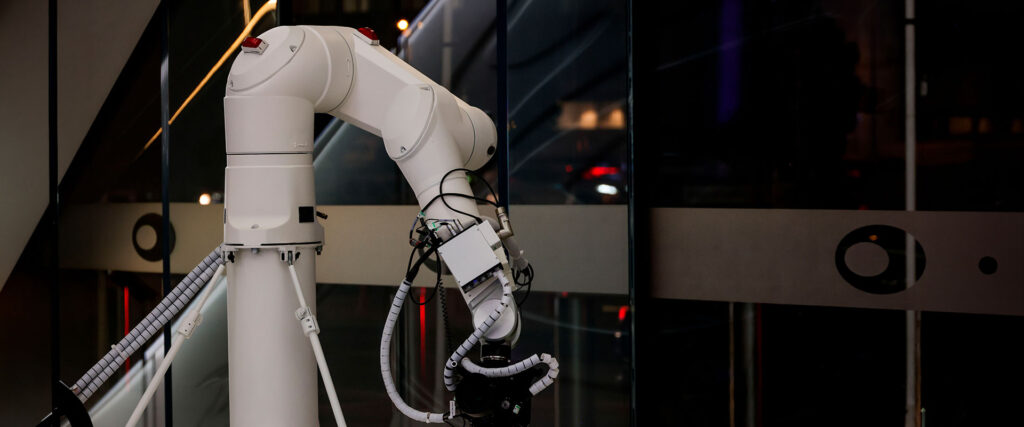
HANNOVER MESSE 2027 takes place in Hannover from April 5–8. The trade show brings together suppliers and customers across industries such as automation, mechanical engineering, industrial software, and energy. As an exhibitor, your challenge is to make complex products and technologies easily understandable to visitors.
This guide covers the practical details of the event and offers advice on demonstrations, technical requirements, and planning your exhibition stand.
When and Where Is HANNOVER MESSE 2027?
- Dates: Monday, April 5 through Thursday, April 8, 2027
- Opening hours: 9:00 a.m.–6:00 p.m. on all four days
- Venue: Hannover Exhibition Grounds, 30521 Hannover, Germany
- Partner Country: Spain
- Official website: HANNOVER MESSE
The trade show will run for four days in 2027. Plan your staffing, customer meetings, and return travel around the current schedule rather than the five-day format used in previous years. The shorter event makes clear priorities and careful planning even more important than previously.
What could your exhibition stand cost?
Choose your stand size, configuration, and optional features to get a no-obligation price estimate in minutes.
Exhibition Space, Registration, and Tickets
If you want to exhibit, you can contact HANNOVER MESSE about participating in 2027 and reserving exhibition space. Describe your product area and requirements so the organizers can help clarify location, participation options, pricing, and the deadlines that apply to you.
Keep the cost of renting exhibition space separate from the cost of the stand itself, technical services, and transportation. This will make the budget easier to understand when comparing your options.
Colleagues and customers attending as visitors can find the current options on the official ticket page.
Hotels and Transportation to the Exhibition Grounds
Choose your hotel and plan your daily transportation based on your location within the exhibition grounds and the entrance you will use. Walking from one end of the grounds to the other can take approximately 20–30 minutes.
Allow enough time between meetings in different halls and include travel across the grounds in your daily schedule.
The organizer provides practical information about traveling by train, car, and plane in its travel guide.
Choose Your Exhibition Area Based on the Customers You Want to Meet
HANNOVER MESSE covers several parts of the industrial value chain. Your location and message should therefore reflect who will use your solution. A supplier hoping to meet machine builders has a different objective from a software company looking to speak with production managers.
The organizer lists seven main exhibition areas for 2027:
- Automation & Smart Manufacturing
- Industrial Engineering & Supply
- Motion & Drives
- Compressed Air & Vacuum Technology
- Digital Solutions
- Industrial Energy
- Research & Innovation
Use these areas as the starting point for a conversation with the organizer and review the official hall plan. In addition to your product’s technical category, consider where you are most likely to meet the companies and professionals you want to reach.
Let the same decision guide the message on your stand. A sensor may be relevant to several industries, but the presentation becomes more concrete when it shows a specific application, such as monitoring vibrations in a motor, controlling a production process, or detecting faults in a component.
If your solution is designed specifically for chemicals, pharmaceuticals, biotechnology or other process industries, ACHEMA 2027 may offer a more targeted audience.
Build the Demonstration Around a Specific Operational Challenge
Start with a situation the customer will recognize. Where do delays, energy waste, quality issues, or unnecessary manual work occur? Then build the demonstration around how your solution changes that situation.
A short demonstration can follow three steps:
- The challenge: Show the object, process, or problem that needs to be addressed.
- The solution: Show what your technology does and where it fits into the process.
- The result: Show or explain the effect, such as changes in cycle time, accuracy, or energy consumption.
If you work with visual quality control, for example, you could demonstrate how the system distinguishes between a correct and a defective item. This gives visitors a concrete starting point for asking questions about the solution.
Be clear about what is part of the demonstration and what has been documented in real operating conditions. If you use test data, simulations, or estimated savings, explain the assumptions so visitors can assess whether the results are relevant to their own production environment.
When You Cannot Bring the Entire System
You do not need to transport a complete production line to Hannover to explain how it works. A selected component can be combined with footage from the facility, a physical model, or a display of process data.
Let the physical object and the digital content support each other. If you are displaying a drive unit, for example, an animation can show its position within the machine while a team member explains load, control, and maintenance.
An LED screen integrated into the exhibition stand can make the process visible from a distance. Detailed diagrams and software interfaces should be positioned where visitors can get close enough to read and explore the content.
Prepare for the Technical Conversation
Once the demonstration has created interest, the conversation will often turn to how the solution fits into the customer’s existing setup. Prepare the information needed to make that assessment.
For software and automation, this may include data sources, interfaces, and integration with existing systems. For mechanical components, it may include dimensions, loads, and service access. For energy solutions, it may include consumption profiles and connection requirements.
A simple system diagram can show what you supply, what the customer needs to have in place, and where potential partners are involved. Keep relevant data sheets and technical documentation available so your team can quickly answer specific questions.
Design the Stand for Both Overview and Technical Detail
Some visitors need a brief introduction. Others arrive with a specific challenge and want to discuss the details. The stand should accommodate both types of conversation.
Along the aisle, you can present the application and its main benefit. Further inside the stand, you can create space for discussing designs, samples, calculations, or software. On a smaller stand, the same area can serve both purposes with presentation materials that easily switch between a general overview and technical detail.
Make sure a demonstration with several viewers does not block the entrance or access to meeting areas. The layout and product presentation of the stand should reflect both the equipment and the way visitors are expected to move through the space.
Assign clear roles to the team as well. Who welcomes new visitors while a colleague is involved in a technical discussion? Which questions can the rest of the team answer when the specialist is attending a meeting in another hall?
Clarify Machinery and Utility Requirements Before Finalizing the Design
If you are bringing machinery, robots, or other operating equipment, include the practical requirements in the initial floor plan. Changes to utilities or equipment placement can affect the floor, walls, and the rest of the stand layout.
Review the following:
- The equipment’s dimensions, weight, and handling requirements during move-in and move-out.
- Electricity, compressed air, network access, and other required connections.
- Space for operation, demonstrations, and any necessary safety barriers.
- Access for servicing, consumables, and storage during the trade show.
- Time for installation and testing after the stand has been built.
The exact requirements must be clarified for your equipment and location. The organizer has published technical regulations for HANNOVER MESSE 2027, which you and your suppliers should review before finalizing the plans.
Prepare a backup presentation in case a live demonstration cannot run. A recording of the same process can keep the conversation moving while the problem is being resolved.
Find Relevant Meetings in the 2027 Program
NexGeM – Next Generation Metalworking will take place alongside HANNOVER MESSE from April 5–8, 2027. Announced by the organizer and the German Machine Tool Builders’ Association, VDW, the new trade show focuses on digitalization in machine tool manufacturing.
If you supply software, sensors, or automation solutions to machine builders, NexGeM may be relevant to your meeting schedule. Use the published program and exhibitor directory to identify companies you want to speak with, and arrange meetings in advance when possible.
Spain is the Partner Country for 2027. If the Spanish market is relevant to your plans, follow the organizer’s updates about Spain’s participation and identify activities and contacts that may be useful to your company.
Bring Home the Customer’s Application, Not Just Their Contact Details
After a conversation about an industrial solution, a name and email address are rarely enough for an effective follow-up. Record the challenge the customer wants to solve and the technical factors that will determine whether you can help.
A short note can include:
- The customer’s existing machine or process.
- An important requirement or technical limitation.
- The expected project timeline.
- The agreed next step and who is responsible for following up.
The next step could be a test using the customer’s own components, a technical clarification, or a meeting with their production manager. This allows the follow-up to continue the specific conversation from Hannover.
Are You Bringing Your Industrial Solution to Hannover?
Once you know what you want to demonstrate and which conversations the stand needs to support, the design and practical requirements can be brought together in a single plan.
At Wieben Design, we help with the design, production, transportation, and installation of exhibition stands. We start with your products and requirements, bringing demonstrations, meeting areas, and practical functions together in one complete solution.